8 results found
Cultural landmarks
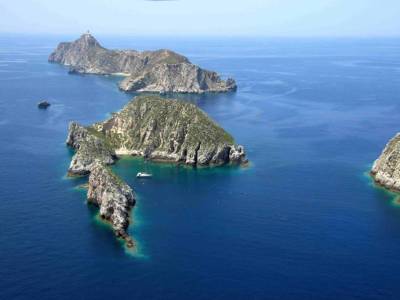
In the middle of the blue Adriatic, far from the mainland, four islands of special power and stories emerge from the sea. Svetac, once a lively fishing island, preserves the memory of life in harsh conditions and the struggle of man with the sea. Brusnik and Jabuka, born from fire, are unique in their magmatic origin and black rocks that protrude from the open sea like sculptures. Brusnik slowly "grows" from the sea, while Jabuka, resembling a black pyramid, defies everything, offering no shelter to a single ship. The most distant and largest of them, Palagruža, has been a landmark for sailors for centuries, a mythical place of ancient stories and the scene of numerous shipwrecks. These islands are not just geographical points on the map - they are natural monuments, witnesses of geological processes, fishing ventures and maritime legends. Each of them tells a different story, and together they form a unique whole - the black pearls of the open sea, the precious heritage of the Adriatic.
Explore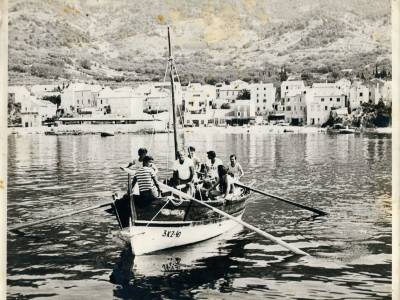
Located on the western part of the island of Vis, Komiža has grown for centuries along the sea, which has shaped its identity and everyday life. From the first records in the 16th century, through the immigration of families fleeing the Ottoman threat, to the fishing industry that has become the trademark of the place – history is intertwined with the sea and people. The visit of Pope Alexander III in 1177 is particularly memorable, when this was the first Croatian place visited by a pope. Legends such as the Route of Diomedes and archaeological traces testify to the thousand-year continuity of life and navigation, while tradition and nature preserve the story of the coexistence of man and the sea.
Explore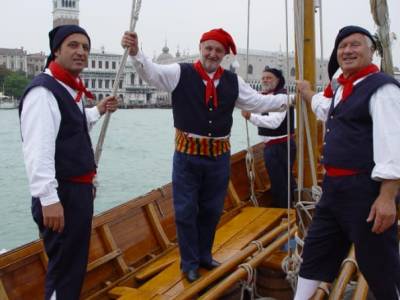
In Komiža, the sea is not just a space but also a destiny. For centuries, the people of Komiža lived alongside it and from it, carrying both its gifts and its dangers. Their lives were shaped by the ships they built, the language they spoke and the customs with which they invoked protection from heaven. Thus, a unique heritage was created – a combination of faith, knowledge and courage that still forms the heart of Komiža today. The fishermen and their boats were watched over by Saint Nicholas, the patron saint of travelers and the city, to whom they burned an old ship every winter as a sign of gratitude and prayer for the salvation of all others. From the need to survive on the high seas, the falkuša was born – a ship that hides two souls and which made the people of Komiža the first fishermen of the open sea. And in order to pass on all this knowledge, a special lingua halieutica developed, a fishermen's language intertwined with words about the sea, wind and catch. These are all threads of the same story – stories about Komiža, which for centuries has known how to love, respect and outwit the sea. Stories that today are not just memories, but living heritage, recognized and protected, and proudly carried into the future.
Explore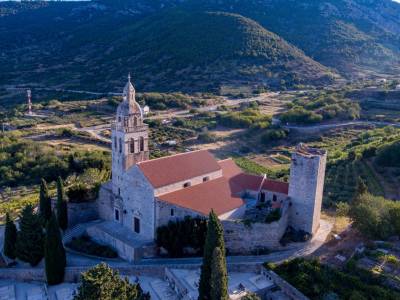
On the islands of Vis, Biševo and Sveca, churches have been preserved that testify to the millennial presence of Christianity and the Benedictine order in this part of the Adriatic. The Church of Our Lady of Planica on Vis, with its rare circular shape, is reminiscent of the Church of St. Donatus in Zadar, while on Sveca, the small church of St. Andrew has been preserved – the remains of a former Benedictine monastery from the 13th century. On Biševo, in the settlement of Polje, there is the Church of St. Sylvester, built in the mid-11th century, known for the Madonna of Biševo, one of the oldest images of the Virgin Mary in Dalmatia. These valuable monuments of culture and religion, today protected cultural properties, connect the islands into a unique historical and spiritual whole.
Explore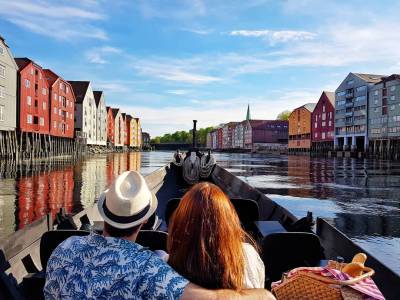
Welcome aboard Trondheim by Boat! We are very happy to have you with us today. Trondheim is a city with more than a thousand years of history, and one of the best ways to experience it is from the water. Today, we will take you on a journey through Trondheim’s unique mix of history, coastal culture and modern city life. Trondheim was founded by Olav Tryggvason in the year 997 and was Norway’s capital for 200 years. Through Nidaros Cathedral and the archbishopric, the city became an important religious and political centre, as well as a major destination for pilgrims. The Nidelva River has been the city’s lifeline and trade route since before the Viking Age. Trondheim and the surrounding region also have deep connections to Sámi history and culture. After more than 400 major city fires, especially the great fire of 1681, Trondheim was rebuilt with wide streets based on Cicignon’s city plan. Over time, the city developed from an important trading centre with wharves along the Nidelva into a leading university and technology city, combining historic heritage with forward-looking innovation. As we sail out, we will pass some of the city’s most iconic sights. We will see the colourful wharves along the Nidelva, a reminder of Trondheim’s history as one of Norway’s most important trading cities. We will also pass Nidaros Cathedral, Norway’s national sanctuary, and Gamle Bybro, often called the “Gate of Happiness”, which has connected the city since 1681. We are proud to be your skippers and guides today. Our goal is to give you an authentic experience filled with sea air, history and a good atmosphere. Sit back, breathe in the fresh sea air and enjoy the trip. If you have any questions along the way, please feel free to ask us. Welcome aboard!
Explore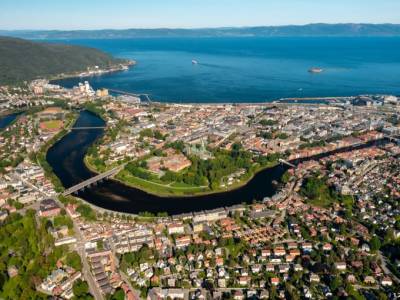
A warm welcome to Trondheim! We are very happy to have you with us on this walking tour. Trondheim is a city founded in the Viking Age, shaped by the Middle Ages and developed through centuries of trade. Since it was founded by Olav Tryggvason in the year 997, Trondheim has played a central role in Norwegian history. The city was Norway’s capital for 200 years and became the heart of medieval Norway. The city’s impressive architecture, with Nidaros Cathedral as its greatest landmark, reminds us of a time when Trondheim was an important religious and political centre. As we walk through the streets, we will see traces of the city’s proud trading history. The Nidelva River has always been Trondheim’s lifeline. The colourful wharves along the river remind us of the time when Trondheim was one of Norway’s most important trading cities. After the great fire of 1681, the city was rebuilt according to General Cicignon’s plan. This gave Trondheim the structure we still see today, with broad streets, historic wooden houses and charming old neighbourhoods. We look forward to showing you how the history and architecture of the past are still alive in today’s modern city. Let’s begin our tour!
Explore
Edinburgh is built on a volcano, and the city has never quite got over the drama of it. From the castle on the rock, the Royal Mile falls away towards Holyrood, past narrow closes and streets buried beneath the ones you're walking on. Across the valley the New Town lies in straight Georgian lines, as if the city changed its mind. This walk takes you through both – and up Arthur's Seat, where you can see why each one sits where it does.
Explore
A walking tour of central Copenhagen. 15 stops, 6.1 km, around two hours at an easy pace. The walk runs from City Hall Square to The Little Mermaid and covers the old town, Slotsholmen, the harbour front and Frederiksstaden. There is no fixed order: you can join anywhere, skip stops and turn back, and each point plays when you enter its geofence.
Explore