0
Discover Namsos, a town shaped by the sea, timber industry, and music. As part of the Kystriksveien AS experience, this walking tour offers a deeper understanding of the culture, history, and nature along one of Norway’s most scenic coastal routes. The tour provides engaging stories about the people, industries, and natural beauty that define Namsos and its surroundings. With location-based storytelling, you’ll explore the town at your own pace, while also learning about Kystriksveien AS’s trusted partners, who offer memorable experiences along the route. HIGHLIGHTS ⚓ Namsos Harbor & Timber Industry Learn how Namsos became a key player in Norway’s timber export trade and coastal economy. 💥 World War II and the Bombing of Namsos Hear the dramatic story of April 1940, when Namsos was bombed and nearly destroyed during the war. 🎸 Rock City – The Sound of Namsos Experience the town’s deep connection to Norwegian rock music, with legends like Åge Aleksandersen leaving their mark. ⛪ Namsos Church A symbol of resilience, this modernist church was rebuilt after WWII and stands as an architectural landmark. 🏞️ Klompen Viewpoint (Optional uphill walk) Take in panoramic views over Namsos, Namsenfjord, and the surrounding islands from this easily accessible viewpoint. ABOUT THE TOUR This self-paced walking tour allows you to explore Namsos’ coastal beauty and cultural heritage while gaining insight into the unique destinations along Kystriksveien. Learn more about Kystriksveien AS’s partners, who provide excellent accommodation, dining, and activities along the way. INCLUDED ✔️ Location-based storytelling with engaging history, culture, and nature insights. ✔️ Information about recommended experiences from Kystriksveien AS and its partners. ✔️ Self-paced experience – start and pause whenever you like. NOT INCLUDED ❌ Entrance fees to museums or attractions. ❌ Food, drinks, or personal guide services. PRACTICAL INFORMATION Duration: Approx. 1 hour (flexible). Starting point: Starting point is optional, but Rock City is a good choice. Languages: Available in multiple languages. 📲 Ready to explore Namsos on foot? Download the GuideToGo app and discover the stories, landscapes, and experiences that make Kystriksveien a must-visit destination! 🚶♂️✨

Restless? Now you've arrived at Namsos Storsenter, a modern shopping center that serves as a natural hub in the town. Here, you'll find over 30 stores and services ranging from fashion and interior design to groceries and wellness. Among the most popular are chains like H&M, Coop Mega, and Elkjøp. The center is designed to be accessible and convenient, offering a total of 650 parking spaces across the premises. This isn't just a place for shopping; it's also a meeting spot for both locals and visitors. Take a break at one of the cozy cafés or enjoy a simple meal as you explore the wide selection. Whether you're shopping big or just browsing, Namsos Storsenter offers a complete and relaxed shopping experience.

Have you ever thought about how music can tell the story of an entire region? Here, you can experience a unique cultural venue that celebrates Namsos as the rock capital of Trøndelag. Rock City Namsos is not just a museum but also a vibrant arena for music, history, and experiences. Explore interactive exhibitions that take you through the history of Norwegian rock music, from its humble beginnings to today's stars. You'll also discover how music has shaped the identity of Namsos and the surrounding region. Rock City inspires visitors of all ages, offering a vivid insight into the power of culture. From concert stages to recording studios—this is a place that truly rocks!

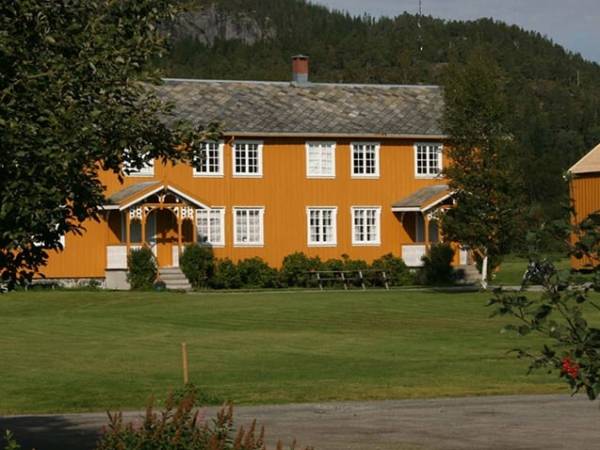
You’ve now arrived at Namdalsmuseet, an open-air museum that takes you on a journey back in time. The museum features over 20 historic buildings, offering a glimpse into life in Namdalen from the 1600s to the 1900s. Here, you can explore everything from old farmhouses to school buildings and a blacksmith's workshop. Each building has its own unique story, and the exhibitions provide a vivid picture of the everyday lives of past generations. The museum also hosts cultural events and family-friendly activities, including guided tours and craft demonstrations. Namdalsmuseet is a place where history meets nature, surrounded by beautiful scenery and peaceful surroundings. It’s the perfect stop for both learning and inspiration!

You’ve finally arrived at Klompen, the town mountain of Namsos, rising 114 meters above sea level. The hike up here is short, but the reward is immense. From the top, you’re treated to a stunning panoramic view of Namsos and its surrounding areas. To the north, you can see the Namsen Fjord stretching out toward the sea, framed by green hills and dotted with small islands floating on the water. Below you lies the town center, its network of streets and houses resembling a living model of Namsos. To the south, you can spot the forested hills that enclose the valley. This is a place where nature and history come together. Whether you take a moment to rest or simply soak in the magnificent view, Klompen offers an experience to remember.

Have you heard of Klompen? Also known as Bjørumsklumpen, it’s the town mountain of Namsos, standing 114 meters above sea level. It’s just a 20-minute walk from the town center to the top, where you’ll be rewarded with breathtaking views of the Namsen Fjord and the town. Klompen has been a popular hiking destination for over 100 years. The first cabin was built by Namdalens Turistforening in 1893. Today, you’ll find the Klompen Pavilion, built in 2016, adding a modern touch to this historic landmark. There are several marked trails leading to Klompen, including one that starts right by Rock City. The trail is well-secured with railings and concrete steps in the steeper sections. On the way down, you can opt for a gentler, paved route. Klompen is also being developed as a climbing site, offering routes ranging from easy to challenging.

You’ve now arrived at Namsos Church, a modern building with a profound history. Built in 1960, this is the third church to stand on the same site, following the destruction of its predecessors during the bombing of Namsos in 1940. The church is known for its simple yet elegant design, featuring a tall tower that reaches toward the sky. The stained glass windows in the choir create a beautiful interplay of light and color, offering a serene atmosphere inside. From the church, you can also enjoy a view of the town, as its location makes it a natural centerpiece of Namsos. This is a place for reflection, culture, and a powerful reminder of the town’s resilience in overcoming challenging times.

The Bust in Front of You is Louis Kvalstad. This statue honors Louis Kvalstad, a man who used both brush and pen to depict life in Namdalen. Created by Hjalmar Hansen and erected by the Namsos Art Association with support from the municipality, it pays tribute to an artist and poet who left a lasting legacy. Louis Kvalstad grew up in Skage, Namdalen, where life was marked by hard work and modest means. Despite limited formal education, he debuted as a poet in 1936 with his collection Kornsus, celebrated for its vivid imagery and deep emotions. Through both his words and art, Kvalstad explored the tension between the serenity of his rural hometown and the allure of the big city. Take a moment to reflect on his life and works, and how he captured the soul of Namdalen through his artistry.

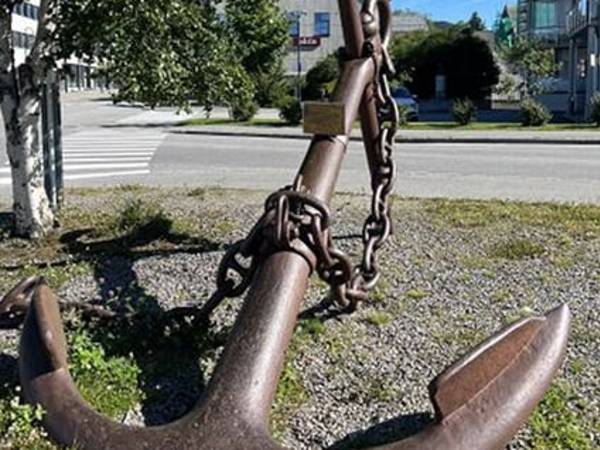
The Russerankeret (Russian Anchor) Here at the harbor, you’ll find Russerankeret, a Dutch stock anchor with a heavy history. It was brought here by German occupiers during World War II, intended to be used as reinforcement for the concrete pier in Namsos. Thanks to Harbor Master Henrik Andersen and Russian prisoners of war, the anchor was saved and now stands as a memorial. During the war, over 100,000 Russian POWs were sent to Norway, many forced into labor under horrific conditions. Thousands perished, including many in this region. The anchor serves as a stark reminder of Namsos’ dramatic wartime history and the suffering and sacrifices of the prisoners who endured so much in the fight for freedom. Take a moment to reflect on their courage and the legacy they’ve left in our history. In Russerparken, you’ll also find a memorial plaque dedicated to the Soviet soldiers held captive in Namsos during World War II.

In front of you stands The Bastion, a reminder of a time marked by both challenges and solidarity. Built as emergency relief work in 1936, it provided much-needed jobs during difficult times while also fostering pride and a sense of community among those who helped create it. Art and architecture like this show how creative projects can bring joy, even in hard times. Over the years, The Bastion has been a backdrop for military ceremonies as well as festive occasions. Today, it stands as a symbol of resilience, creativity, and hope. Along the wall, you’ll find a stone relief depicting the coat of arms of Namsos. See if you can spot it and reflect on how art and architecture can connect the past, present, and future.

Have you ever seen how timber processing was done over 100 years ago? Now you’ve arrived at Spillum Sawmill and Planing Mill, a unique part of the Norwegian Sawmill Museum. It is the only remaining steam-powered sawmill in Norway that still has its original machinery intact. The sawmill was established in 1884 and operated until 1986. Here, you can experience how saws and planing machines were used to process timber and learn about the sawmill’s vital role in Norway’s industrial history. The museum offers both interactive exhibitions and live demonstrations, providing a glimpse into the lives and work of those who shaped this important industry. Spillum is not just a historic site but a living story of how timber processing laid the foundation for many communities in Norway. Photo: Anja Heie

Here at the marina, you’ll find "Vinsjan på kaia", or Winches on the Pier, a humorous and nostalgic monument inspired by the famous song by D.D.E. This artwork pays tribute to Namsos’ history as both a sawmill town and a maritime hub. The monument features two winches and a signpost pointing toward cities like Bergen, Murmansk, and Mo. The area is also decorated with lyrics from iconic Trøndelag artists such as Prudence, Åge Aleksandersen, and D.D.E., all revolving around themes of the sea, the coast, and life by the water. "Vinsjan på kaia" is more than just a song—it’s a part of the town’s soul and identity. Take a moment to read the lyrics around the monument and reflect on how music and the sea have shaped Namsos and its people.

Before you stand four sculptures: The Lumberjack, The Log Driver, The Sawmill Worker, and The Cook. Created by artist Svein-Tore Kleppan, these sculptures are located in Namdalsparken, also known as Sculpture Park, and honor the significance of the forestry industry for Namsos and Namdalen. The sculptures are arranged around a reflecting pool symbolizing the Namsen River. The Log Driver, the Lumberjack, and the Sawmill Worker were unveiled by H.M. Queen Sonja in 1995, a gift from the town’s business community in celebration of Namsos’ 150th anniversary. During the ceremony, the Queen requested a female representation. The response came in 2006 with the unveiling of The Forest Cook, also crafted by Kleppan. This park is a wonderful place for reflection, where art and history come together to tell the story of the forestry industry’s central role in the region.

Have you seen "Rompa mi", or mya ass? You’re now standing before the 3.7-meter-tall installation celebrating the band D.D.E., one of Norway’s most beloved party bands. Founded in Namsos in 1992, D.D.E. is famous for their lively concerts and hits like "Det går likar no" and, of course, "Rompa mi". This installation, also known as the "rump bench," is a humorous tribute to the band and their significance in Norwegian music. Over the years, D.D.E. has delighted fans with their down-to-earth style and catchy songs, deeply rooted in Trøndelag’s culture. This artwork has quickly become a favorite among locals and tourists alike—a fun and musical stop along your journey through Namsos.

Do you know who Norway’s King of Rock is? You’re now standing before the sculpture of Åge Aleksandersen, created by Errol Fyrileiv in 2009. Unveiled on Åge’s 60th birthday, the sculpture celebrates his profound influence on Norwegian music. Born and raised in Namsos, Åge Aleksandersen is known for his heartfelt lyrics and catchy melodies. With songs like "Lys og varme" ("Light and Warmth") and "Fire pils og en pizza" ("Four Beers and a Pizza"), he has touched generations and created music that has become a part of Norway’s cultural heritage. Originally located at Rock City, the sculpture now stands at Festplassen, a fitting place to honor the town’s greatest musical icon. Take a moment to reflect on the music that has shaped both Namsos and Norway.

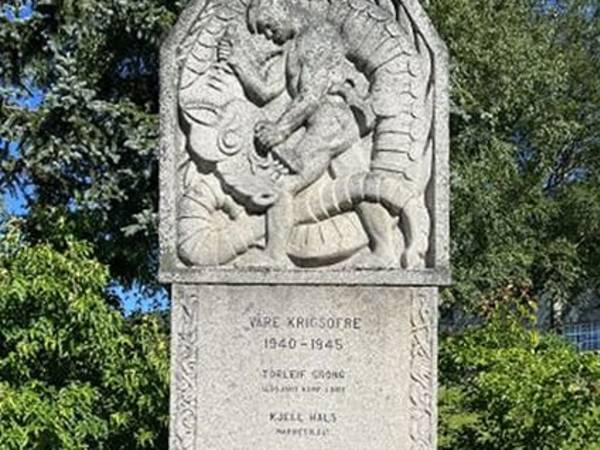
You are now standing at the memorial "Våre krigsofre" or Our War Victims, created by Hanna Jessen in 1950. This relief honors the residents of Namsos who lost their lives during World War II. The inscription lists the names of local victims from 1940 to 1945. Namsos was severely affected by the war, particularly during the bombing in 1940, which left much of the town in ruins. Many lives were lost in the attacks, while others perished at sea, serving in perilous but vital contributions to the war effort. This memorial serves as a reminder of the sacrifices made and the dramatic events that shaped the town and its people during the war. It is a place for reflection and respect, reminding us of the importance of peace and freedom.

Before you stands the bust of Olav Duun, created by Hjalmar Hansen in 1966. The inscription on the base reads, "Eg skal ta folk og syne dem fram" ("I shall take people and show them as they are"), capturing much of Duun's literary essence. He transformed the lives, thoughts, and struggles of ordinary people into literature with profound insight and universal themes. Born on Jøa, near Namsos, Duun was a master at exploring questions of morality, ethics, and what it means to be a fellow human being. Through works like Juvikfolket (The People of Juvik) and Medmenneske (Fellow Man), his voice remains as relevant today as ever, addressing questions that resonate in our modern context. What can we learn from Duun today? Perhaps to see the world through others’ eyes, reflect on choices and responsibilities, and find strength in everyday life. Take a moment to consider how his words can continue to inspire us.

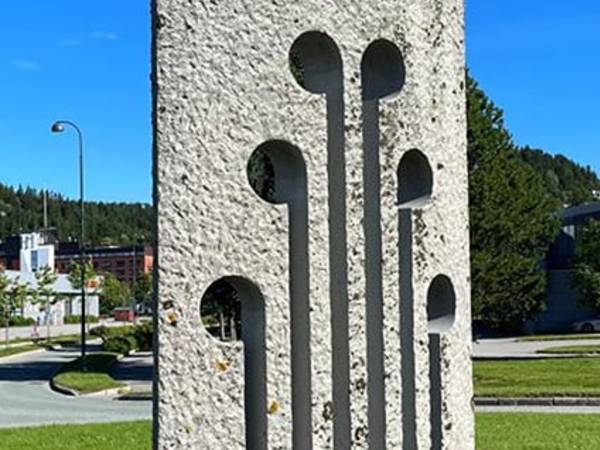
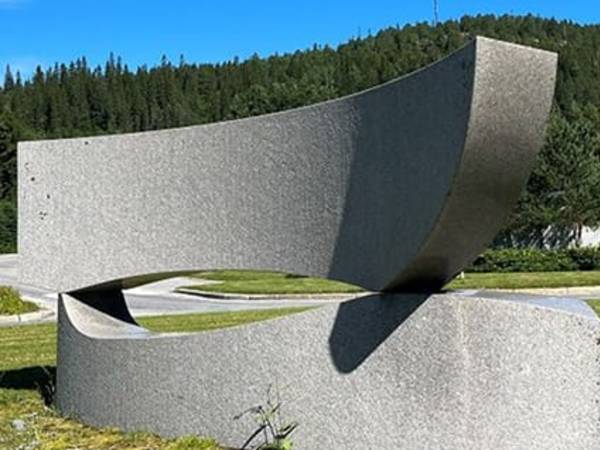
In the roundabout ahead stands the sculpture "Rock", created by Errol Fyrileiv in 2005. Carved from rough Iddefjord granite, its curved form is adorned with musical notes, celebrating Namsos as Norway’s rock city. The sculpture symbolizes the power of music and the town’s rich musical heritage, from legendary artists like Åge Aleksandersen and D.D.E. to the new generations of musical talent. The notes on "Rock" remind us of how music serves as a universal language that connects people and how it has been a vibrant part of Namsos' identity. As you look at this sculpture, you can almost hear the rhythm of the town’s history playing in the background. Perhaps it also invites you to reflect on how music has shaped your own life?

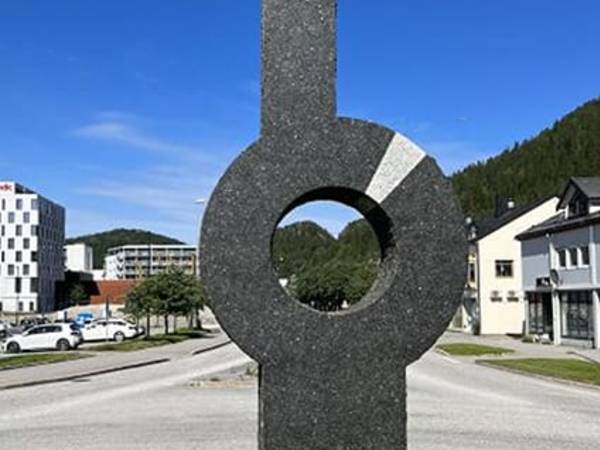
In the roundabout ahead, you’ll see the sculpture "Orient", created by Errol Fyrileiv in 2005. Standing three meters tall, it is crafted from Bergan syenite and white Trondhjemite, with an intriguing combination of finely polished surfaces and rough-hewn edges that give it a dynamic expression. Errol Fyrileiv, an artist with roots in Namsos, has also designed sculptures for two other roundabouts in the town. His works give Namsos a unique character, demonstrating how art can be seamlessly integrated into everyday landscapes. "Orient" symbolizes direction and movement. Pause for a moment and reflect: How can art like this make ordinary places more engaging and meaningful? Perhaps this sculpture will also inspire you to think about your own direction in life?

The sculpture you see at the roundabout here in Hestmarka is called "Blankin", created by Errol Fyrileiv in 2005. Made from Iddefjord granite, it features flamed and polished surfaces, creating a fascinating contrast between the raw and the refined. This sculpture, one of three Fyrileiv designed for roundabouts in Namsos, demonstrates how art can transform an everyday traffic area into a space for reflection and wonder. The name "Blankin" might evoke something shiny—perhaps something that catches the light in nature or in human ideas. Pause for a moment and observe how the shapes and materials give the sculpture a balance between strength and tranquility. What do you see in "Blankin"? A symbol of the area’s identity, or something entirely different?

Have you ever thought about the stories a sculpture might hold? Before you stands "Lekande Flickor" ("Playing Girls"), created by Britta Nehrman in 1966 and gifted to Namsos by David Hummel. Hummel was a provincial doctor in Gäddede from 1932 to 1956, but also a courageous resistance fighter during World War II. He helped many Norwegian refugees, organized courier routes between Norway and Sweden, and collaborated with resistance figures like Sonja Wigert, a spy within the German commissioner’s office. For his efforts, he was awarded both the St. Olav’s Order and the Order of the White Rose of Finland. The sculpture symbolizes the playful moments of life but also serves as a reminder of the giver’s brave legacy. What do you feel when you see these joyful figures while reflecting on Hummel’s profound contributions to freedom?

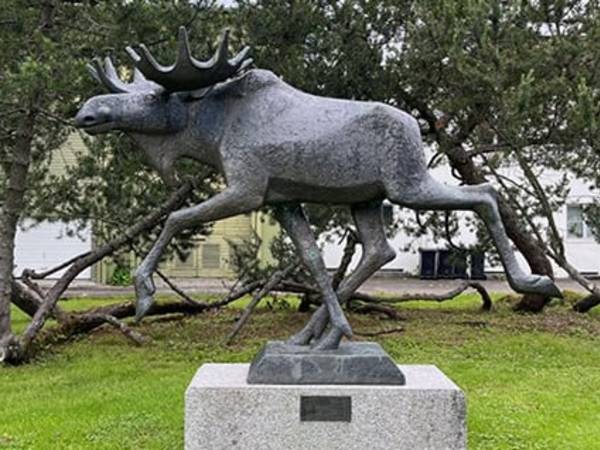
You are now looking at "The Moose", a statue created by Skule Waksvik in 1967. This impressive bronze sculpture stands as a symbol of the moose's importance to the region and is a popular landmark in Namsos. Known as the "King of the Forest," the moose has been a vital resource for local communities for centuries. In Namdalen, moose hunting has long been a tradition, providing both food and a social activity. The region remains renowned for its large moose populations and rich hunting traditions. This statue is not only a work of art but also a tribute to the proud animal that has played a central role in the forest culture and landscape surrounding Namsos.

In front of you, in the pool by the cultural center, stands the sculpture "En Verden" ("One World"), created by Steinar Christensen in 1990. Made of corten steel with its characteristic rust-colored surface, the work consists of two elements: a tuning fork and a combination of a flower and a star. The tuning fork represents the importance of music in cultural life, while the flower symbolizes soft, cultural values such as beauty and emotion. The star, positioned in the water, represents reason, knowledge, and science, alluding to the activities of the library. The sculpture invites reflection on how music, art, and knowledge come together to create a whole—a world of experiences and understanding. What stands out to you as you observe these elements? Perhaps they speak to you about the balance between emotion and reason in your own life?

You are now standing at the 22nd of July Memorial, created by artist Nico Widerberg in 2012. This memorial, donated by an anonymous benefactor, is located here by the waterfront near Robrygga Health Center. The memorial honors the victims of the terror attacks on July 22, 2011, when 77 lives were lost in the attacks on the Government Quarter in Oslo and at AUF’s summer camp on Utøya. This tragic event shook Norway and the world, reminding us of the importance of unity and love in the face of hatred. On the back of the memorial, you’ll find a poem by Lars Saabye Christensen, inviting reflection and respect for those affected. This is a quiet place for contemplation and remembrance.

In front of you stands Hånd, or "The Hand", a sculpture created by Nils Aas in 1991. Standing 3.6 meters tall and crafted in bronze, this striking piece is located at the main entrance of Namsos Hospital. Nils Aas, one of Norway’s foremost sculptors, grew up in Inderøy and is celebrated for his ability to combine strength and emotion in his works. "The Hand" symbolizes both power and care—qualities that also define the role of the hospital. Take a moment to study the details of this monumental hand. What do you see? A helping hand, an expression of community, or perhaps a symbol of safety? The sculpture invites reflection—what does a hand mean to you in life’s many contexts?

In front of you is the Cultural Center in Namsos, a vibrant hub for culture and experiences. Opened in 1988, the center serves as a meeting place for concerts, theater performances, cinema, and other events that bring the community together. The building also houses the Namdalsmuseet Art Museum, showcasing works from both local and national artists. The exhibitions range from traditional art to modern expressions, highlighting the region’s rich cultural heritage and creative spirit. The Cultural Center holds a central place in the life of Namsos, where music, art, and history come together. Take some time to explore the museum or check the schedule for upcoming events—there’s always something exciting happening here!