0
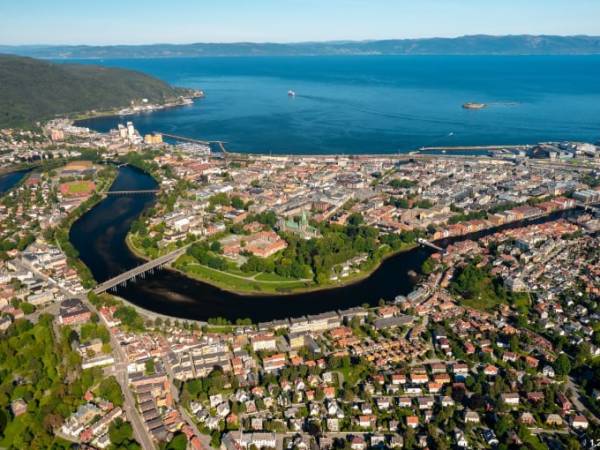
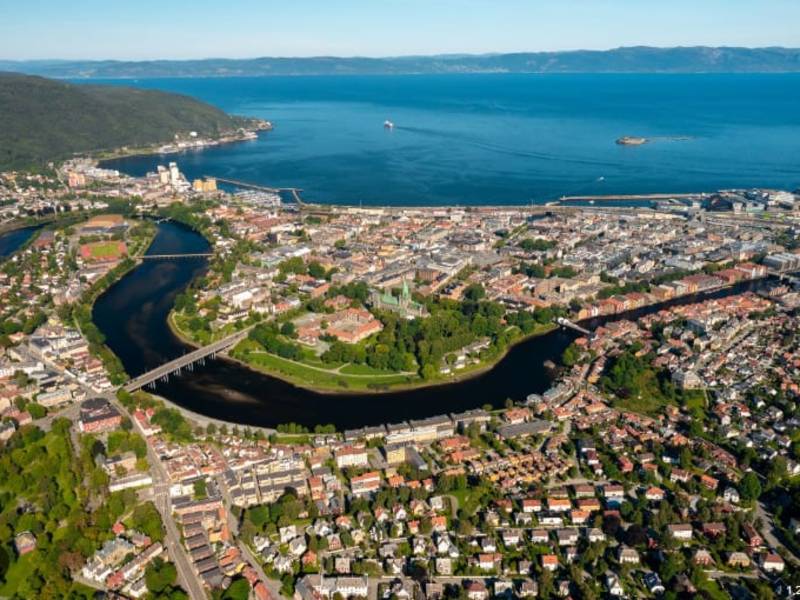
A warm welcome to Trondheim! We are very happy to have you with us on this walking tour. Trondheim is a city founded in the Viking Age, shaped by the Middle Ages and developed through centuries of trade. Since it was founded by Olav Tryggvason in the year 997, Trondheim has played a central role in Norwegian history. The city was Norway’s capital for 200 years and became the heart of medieval Norway. The city’s impressive architecture, with Nidaros Cathedral as its greatest landmark, reminds us of a time when Trondheim was an important religious and political centre. As we walk through the streets, we will see traces of the city’s proud trading history. The Nidelva River has always been Trondheim’s lifeline. The colourful wharves along the river remind us of the time when Trondheim was one of Norway’s most important trading cities. After the great fire of 1681, the city was rebuilt according to General Cicignon’s plan. This gave Trondheim the structure we still see today, with broad streets, historic wooden houses and charming old neighbourhoods. We look forward to showing you how the history and architecture of the past are still alive in today’s modern city. Let’s begin our tour!

A warm welcome to Trondheim! We are very happy to have you with us on this walking tour. Trondheim is a city founded in the Viking Age, shaped by the Middle Ages and developed through centuries of trade. Since it was founded by Olav Tryggvason in the year 997, Trondheim has played a central role in Norwegian history. The city was Norway’s capital for 200 years and became the heart of medieval Norway. The city’s impressive architecture, with Nidaros Cathedral as its greatest landmark, reminds us of a time when Trondheim was an important religious and political centre. As we walk through the streets, we will see traces of the city’s proud trading history. The Nidelva River has always been Trondheim’s lifeline. The colourful wharves along the river remind us of the time when Trondheim was one of Norway’s most important trading cities. After the great fire of 1681, the city was rebuilt according to General Cicignon’s plan. This gave Trondheim the structure we still see today, with broad streets, historic wooden houses and charming old neighbourhoods. We look forward to showing you how the history and architecture of the past are still alive in today’s modern city. Let’s begin our tour!

Brattøra is an area that has changed dramatically over time. Originally, this was not a modern city district at all, but a low-lying area of sandbanks, shallow water, and river deposits at the mouth of the Nidelva River. For a long time, parts of Brattøra were either under water or shaped by mudflats, sandbanks, and harbour activity. Gradually, through land uplift, filling, and dredging, the area became a larger and more important part of the city. In earlier times, Brattøra also had a strong symbolic role. This was the site of Øretinget, an ancient assembly where important decisions were made. The thing, or assembly, was a central institution in old Norwegian Viking society, both legally and politically. The area was also used as a place of execution, so Brattøra was connected to power, law, and punishment. At the end of the 19th century, Brattøra was completely transformed. City engineer Carl Adolf Dahl was behind major plans for a modern harbour and railway. Between 1878 and 1887, the seabed was dredged, and the area was prepared for new harbour facilities and a railway station. Today, Brattøra is a hub for transport, culture, and city life. Here you will find Rockheim, Norway’s national museum of popular music, and Pirbadet, one of the country’s largest indoor swimming facilities. In many ways, Brattøra tells the story of Trondheim in miniature: a city that has always lived with the sea – and has always kept rebuilding itself.

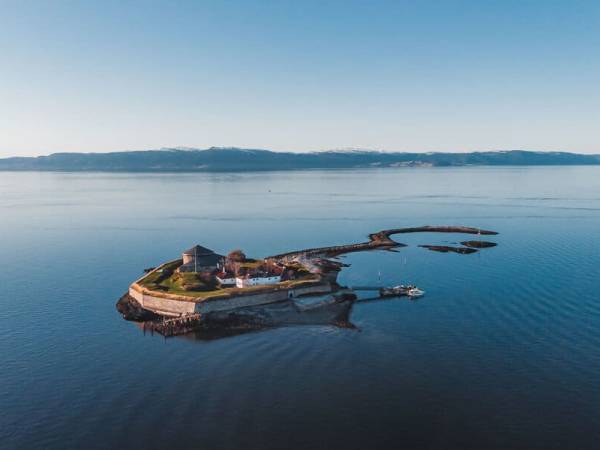
The island you can see out in the fjord is Munkholmen. Today, many people connect Munkholmen with summer, swimming, ice cream and boat trips. But the history of this small island is much more dramatic than the peaceful view might suggest. In the sagas, the island is called Nidarholm. As early as the 10th century, it was used as a place of execution. According to tradition, King Olav Tryggvason had the heads of Earl Håkon and his servant Kark placed on poles here in the year 995. This was a clear symbol of a change in power. Later, the island took on a very different role. In the Middle Ages, Nidarholm Abbey stood here. It was a Benedictine monastery and one of the oldest known monasteries in Norway. It remained in use until the Reformation. In the 17th century, the island was turned into a fortress, and the name Munkholmen came into use. Later, it was also used as a state prison. Its most famous prisoner was Peder Schumacher Griffenfeld, who was held here for 18 years. The French writer Victor Hugo was later inspired by this story when he wrote the novel The Prisoner of Munkholmen. During the Second World War, German forces took control of the island and built anti-aircraft positions here. So when we look at Munkholmen today, we see a peaceful little island. But we also see a place that has been an execution site, a monastery, a fortress, a prison and a military installation.

Today, Solsiden is known for restaurants, shops, and lively city life. But before it became one of Trondheim’s most popular urban areas, this was a busy industrial district. This was the home of Trondhjems Mekaniske Værksted, often called TMV. The shipyard was founded in 1862 and moved here to Rosenborgfjæra in 1886. That move marked the beginning of a golden age for the area. TMV built and repaired ships and developed into one of Norway’s leading shipyards. Well-known vessels such as DS Erling Jarl, DS Haakon VII, MS Harald Jarl, and MS Narvik were built here. These were ships that helped connect the Norwegian coast, and they made the shipyard an important part of Norwegian maritime history. During the Second World War, the German occupation authorities took control of operations. After the war, the yard continued for several decades, but in 1983 TMV was closed down. Today, the area has been transformed into Nedre Elvehavn and Solsiden. Many of the old buildings and docks have been preserved, giving the area its very particular atmosphere. Here, industrial history meets modern city life. That is quite typical of Trondheim: the city builds on its history, rather than erasing it completely.

St Clement’s Church is considered one of the oldest churches in Trondheim. According to saga tradition, it was built by Olav Tryggvason around the year 997, when he founded Nidaros. The church stood close to the royal residence and the old river course, in an area that was central to the earliest city. Later, Olav Haraldsson, Saint Olav, also became closely connected to this place. He is said to have rebuilt the church in 1016. After his death at Stiklestad in 1030, his body was brought back to Nidaros, and tradition also connects his early saintly story to this area. St Clement’s Church burned several times and eventually disappeared from the cityscape. In our own time, its remains have been found through archaeological excavations. These discoveries give us an important glimpse into Trondheim’s earliest Christian history, and into the transition from the Viking Age to the medieval city. Nearby stands K.U.K., a modern art and cultural centre. The name stands for Kjøpmannsgata Young Art, and the building represents a very different period from St Clement’s Church. Right here, some of the oldest and newest parts of Trondheim meet: the first traces of Christian royal power and today’s living art scene.

Trondheim Public Library is a good example of how the city’s history exists in layers. The current main library opened in 1988, and the full complex was completed in 1989. It was built together with older buildings, including Lorckgården and the old town hall. The result is a library where modern architecture and historic buildings stand side by side. But the most special part is found underneath and inside the building. A passage through the library follows almost the same route as Kaupmannastretet, one of the main streets of medieval Trondheim. During archaeological excavations, remains of a medieval church were found here, probably St Olav’s Church, along with traces of the surrounding cemetery. These remains have been preserved and can still be seen inside the library today. This means you can come here to borrow a book and, at the same time, stand in the middle of part of the medieval city. Trondheim’s library tradition also goes far back. As early as the 18th century, a library was established in connection with the Royal Norwegian Society of Sciences and Letters. So the public library is more than a house for books. It is a meeting place between knowledge, medieval history and the Trondheim of today.

The Old Town Bridge is one of the most iconic places in Trondheim – and a natural stop for both photos and reflection. The bridge is often called “The Portal of Happiness”. The name comes from the song Nidelven stille og vakker du er, and it is easy to understand why. From here, you can see the river, the wharves, Bakklandet, and the city’s old wooden houses all at once. The first bridge on this site was built after the city fire of 1681, as part of Cicignon’s new city plan. It was meant to connect the city centre with Bakklandet, but it also had a military function. It formed a strategic link to Kristiansten Fortress on the hill above the city. The bridge you see today dates from 1861 and was designed by city engineer Carl Adolf Dahl. Its red portals have become a symbol of Trondheim, marking the transition between two quite different parts of the city. When you cross the Old Town Bridge, you are not just moving from one side of the river to the other. You are leaving the busier city centre and entering the calmer streets of Bakklandet. That may be why the bridge feels a little special. It is not just a way across the water – it is a small journey in itself.

Bakklandet is Trondheim’s oldest suburb, and one of the city’s most atmospheric neighbourhoods. The area began to grow in the mid-17th century, on the eastern side of the Nidelva River. Because Bakklandet lay outside the old city boundary, it was not included in Cicignon’s strict city plan after the fire of 1681. That is why the streets here still feel more organic. They follow the terrain, giving us perhaps a small impression of what Trondheim may have looked like before the great re-planning of the city. Bakklandet has had a dramatic history. It was burned by Swedish forces in 1658, and again in 1718 – this time by Norwegian forces, as a defensive measure to prevent the enemy from using the area. Along the river there were wharves, workshops, and simple homes. Craftsmen, workers, and small traders lived here, close to both their workplaces and the waterway. Bakklandet was also an important industrial area. There was a brickworks here already in the Middle Ages, and later came shipyards, boat repair, and mechanical industry. In the 19th century, steamships were built here – and so was Norway’s first Norwegian-built locomotive, Thrønderen. Today, many people know Bakklandet for its wooden houses, cafés, and peaceful atmosphere. But beneath the charm lies a history of work, industry, fire, and survival.

Right next to Nidaros Cathedral lies the Archbishop’s Palace, one of the most important medieval building complexes in Norway. This was the home and power centre of the Archbishop of Nidaros until the Reformation in 1537. The archbishop was not only a religious leader, but also one of the most powerful people in the country. The complex was first built in the 12th century, partly under Archbishop Øystein Erlendsson, and was expanded over several hundred years. Over time, the Archbishop’s Palace became a fortified complex, with stone buildings, surrounding walls and rooms for administration. Important decisions were made here, about church matters, economy and politics. In the Middle Ages, this was a place of power, wealth and international contact. After the Reformation, the Church lost much of its power, and the complex was used as a royal residence. Later, it became a military area, with storehouses, depots and buildings connected to the defence of the city. In 1983, a large fire destroyed several of the military wooden buildings. After the fire, extensive archaeological excavations were carried out, giving new knowledge about medieval Trondheim. Today, the Archbishop’s Palace contains museums, original sculptures from Nidaros Cathedral, the Armoury Museum and the Norwegian Crown Regalia. Here, church history, royal power, military history and archaeology all meet in one place.

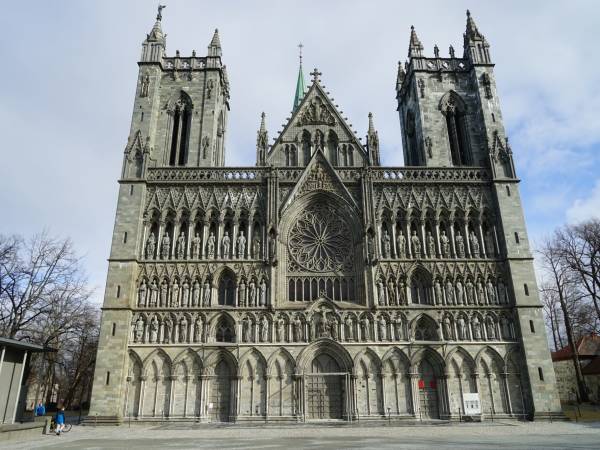
Nidaros Cathedral is Norway’s national sanctuary and one of the most important church buildings in the Nordic region. The cathedral is built over the final resting place of Olav Haraldsson, who fell at the Battle of Stiklestad in 1030. The following year, he was declared a saint, and his grave quickly became an important pilgrimage destination. In the Middle Ages, pilgrims came here from large parts of Northern Europe. Construction began around 1070. The earliest parts were built in Romanesque style, influenced by Anglo-Norman architecture. Later, especially after the time of Archbishop Øystein, the cathedral was expanded in Gothic style, inspired by English cathedrals. In the Middle Ages, Nidaros Cathedral was the archbishop’s church and the centre of the Catholic Church in Norway. After the Reformation in 1537, it became a Lutheran cathedral. The church has been damaged by several fires. After the fire of 1531, the nave stood for a long time as a roofless ruin. Restoration began in 1869 and became one of the largest building projects in Norwegian history. Nidaros Cathedral has also been used for royal coronations and, in more recent times, for the blessing ceremonies of Norwegian monarchs. In the Middle Ages, the cathedral was called Cor Norvegiae – the Heart of Norway. For many, it still is.

Vår Frue Church is one of three medieval churches still standing in Trondheim. The oldest part of the church dates from the late 12th century. Originally, it was known as St Mary’s Church. It was built in stone, using materials such as green schist and soapstone, materials also used in Nidaros Cathedral. Throughout history, the church has been damaged by several fires, but it has always been rebuilt. After the Reformation, Vår Frue Church became one of the city’s most important parish churches. Inside, you will find a large Baroque altarpiece from the 18th century. It was originally made for Nidaros Cathedral, but today it stands here in Vår Frue Church. Beneath the church are old burial chambers from the 17th and 18th centuries, sometimes called Trondheim’s catacombs. The church has a long history as a place of worship, but it is not only a historical monument. Today, Vår Frue is known as an open everyday church. It is used for services, concerts, quiet reflection and social work, including through the Church City Mission. This makes it a living space in the middle of the city, a place where the Middle Ages, faith and modern community meet.

The Market Square is the heart of Trondheim. The square was laid out after the great city fire of 1681, as part of Cicignon’s new city plan. It lies in the middle of the broad street Munkegata, which runs like an axis between Nidaros Cathedral and the fjord. This was no coincidence. The new city plan was meant to give Trondheim more order, better fire safety and clearer public spaces. At the centre of the square stands the statue of Olav Tryggvason, the king who, according to the sagas, founded the city of Nidaros around the year 997. Around the statue, you can see a large sundial in the pavement. It was laid out in 1930, in connection with the 900th anniversary of Saint Olav’s death at Stiklestad. The shadow of the column acts as the pointer. Over the years, the square has been used for trade, markets, political gatherings, concerts and everyday city life. Today, it is also the regular setting for Trondheim’s Christmas market. Here, history and daily life meet. People cross the square on their way to work, school, cafés or shops, while moving through a space that has been planned as Trondheim’s centre for more than 300 years. The Market Square is still where the city comes together.

Stiftsgården is the royal residence in Trondheim and the largest wooden palace in the Nordic region. The building was constructed between 1774 and 1778 for Cecilie Christine von Schøller, one of the richest and most influential women in 18th-century Trondheim. She belonged to the city’s elite, and Stiftsgården clearly shows the wealth and status that some families had at that time. Although the building is made of wood, it was designed as an elegant palace, with elements of both Rococo and Classicism. The main wing is long and impressive, and the building has around 140 rooms, spread across approximately 4,000 square metres. In 1800, Stiftsgården was sold to the state. It was first used as an official residence and later became a royal residence. In 1906, it formally became the official royal residence in Trondheim. Stiftsgården has been the setting for several important events, including coronations, royal blessing ceremonies and official visits. When the royal family is not using the building, parts of it are open to the public. Stiftsgården shows another side of Trondheim: not only medieval history, seafaring and trade, but also power, wealth and royal representation.